Thursday, June 9, 2011

Field Sobriety Tests in Utah DUI Cases


A DUI in Utah is not like a DUI in California. Utah has some severe penalties, most notably that you cannot receive a temporary driver license for work or school if your driver license is suspended based on the DUI. Also, there are minimum mandatory jail sentences on DUI's ranging from 2 days to 62.5 days depending on the type of DUI.

Because they are serious offenses in Utah, if you are charged with a DUI, your attorney must attack every facet of the case. No stone must be left unturned. One of the areas your DUI attorney must look at are the Field Sobriety Tests.

The FST's

There are three standardized field sobriety tests used in most jurisdictions: the horizontal gaze nystagmus, the nine-step walk and turn, and the one leg stand.

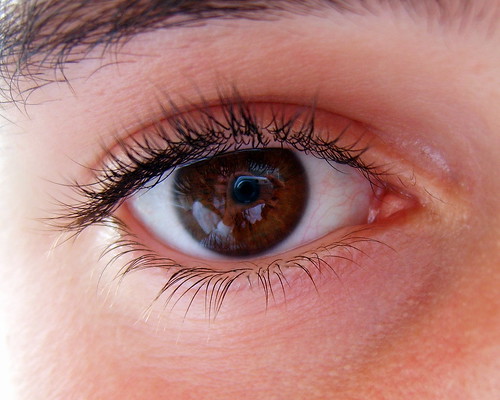
The horizontal gaze nystagmus is the officer causing the eye to track in a certain direction so that he can observe an involuntary jerking in the eye. They check smooth pursuit from right to left, sustained nystagmus at maximum deviation, and onset of nystagmus prior to a 45 degree angle.

The problem with the nystagmus test is that there are a whole host of other causes of nystagmus. Aspirin, caffeine, exposure to cigarette smoke just to name a few. Studies have also shown that a certain percentage of the population is born with naturally occurring nystagmus.

In the nine-step walk and turn, the subject is to walk down a line, turn and walk back. Easy enough, right? Wrong. These tests are not about walking in a straight line, they are about following instructions. The one leg stand is similar as the subject is told to stand on one leg and count to thirty. However, the officer couldn't care less whether you do it well, he's looking for very minute clues. Were your feet more than half an inch apart? Did your arms go above six inches? Did you turn to the left instead of the right? These are the type of details that determine whether you pass or fail the field sobriety tests.

The FST's are not science. They are subjective tests used by law enforcement to make arrests. You do have good DUI police officers who are out there making the best decisions they can with the tools they have, but these tests produce too many false positives to be relied on in criminal cases.

Hire a good DUI attorney if facing a DUI and make sure they fight the accuracy of these tests. Many cases have been won by exposing the subjectivity in these tests.

Friday, February 12, 2010

Follow Up: State Won't Release Killpack Video


As I previously noted, the State was refusing to turn over video of then-Senator Sheldon Killpack's DUI arrest.

The State Records Committee decided Thursday that dash-cam video of former Utah State Senator Sheldon Killpack's arrest for allegedly driving drunk, as well as a Utah Highway Patrol report of the incident, are public records.
However, it may take up to 30 days to turn the records over.

Are Breath Testing Machines Reliable?


One of the linch-pins of DUI enforcement in Utah is a machine called the Intoxilyzer. The latest version is called the Intoxilyzer 8000 and is manufactured by a company called CMI, Inc.

Unfortunately, we don't know if the Intoxilyzer 8000 works. In my experience and based on my research, CMI has never allowed independent researchers to test the machine to verify that it accurately measures breath alcohol levels or that those breath alcohol levels correlate to blood alcohol levels. CMI refuses to sell the machine to anyone but law enforcement agencies and will not even supply information about its software.

California DUI attorney Lawrence Taylor writes on his blog that "In the one case where the manufacturer (Draeger) obeyed a court order — from the New Jersey Supreme Court — the machine involved (AlcoTest 7110) was found to use antiquated software that failed to meet even the most basic governmental and industrial standards."

So, does the Intoxilyzer 8000 work? We don't know. But people are being convicted and often jailed based on a machine that has never been externally verified and may have inaccurate software.

Friday, January 22, 2010

State Won't Release Killpack Video

ABC4 is reporting that the State has refused the media's request for the video of the DUI arrest of Sheldon Killpack. This could result in a court battle.

Thursday, January 21, 2010

Sim Gill Running for DA

As I cross-posted on my new political blog, Utah Capitol Dome, a story today in the Deseret News, Sim Gill announced today that he will be running to be the Salt Lake County District Attorney. In the story, Gill is quoted as saying that he will work to restore public confidence in the District Attorney’s Office.

Mr. Gill is a democrat and is seeking his party’s nomination to run against the current District Attorney, republican Lohra Miller. Greg Skordas, a former member of the Salt Lake County District Attorney’s Office, has already announced his intention to seek the democratic nomination as well.

Sim Gill was my boss when I worked as a Salt Lake City prosecutor for over a year. While I don’t know Mr. Skordas or Ms. Miller personally, and I cannot judge very well their qualifications to be DA, I believe that Mr. Gill would be an excellent District Attorney. While I worked with him, I found him to be an extremely ethical, professional leader. He has the vision to see that in many cases, traditional incarceration is neither cost effective nor a good way to prevent the repetition of criminal behavior. His initiative has brought mental health and drug courts to Salt Lake County and he plans to expand those programs.

Friday, January 15, 2010

Illegal Automobile Search Results in Evidence Being Thrown Out


When the police stop a car for a traffic violation, they have to let the car go once they reasonably finish the original stop.

According to the Salt Lake Tribune, federal judge Clark Waddoups excluded evidence found after an illegal search of an automobile because the police officer continued to question the driver after the traffic stop had concluded.

The driver's attorney, Benjamin McMurray, argued that "no reasonable person would have felt free to drive away from an officer who continued an interrogation despite having repeatedly been refused."

The United States Constitution protects against unreasonable warrantless searches. The driver in this case may have been guilty of speeding, but that did not entitle the police officer to search his car.

I have seen numerous cases, both as a prosecutor and as a defense attorney, in which a police officer improperly extended a traffic stop and asked for consent to search a car. Usually, the officer needs either a warrant to search or the driver needs to give consent to search the car if the search is going to be legal. If the driver does not give consent it is often difficult for the officer to legally search.

Monday, January 11, 2010

Are Eyewitnesses Reliable?


An article in Scientific American questions the reliability of eyewitness identification. One of the major reasons that we should question eyewitness identification is that the process of recalling memories is more like reconstructing an event than replaying a video recorder.

"The uncritical acceptance of eyewitness accounts may stem from a popular misconception of how memory works. Many people believe that human memory works like a video recorder: the mind records events and then, on cue, plays back an exact replica of them. On the contrary, psychologists have found that memories are reconstructed rather than played back each time we recall them. The act of remembering, says eminent memory researcher and psychologist Elizabeth F. Loftus of the University of California, Irvine, is 'more akin to putting puzzle pieces together than retrieving a video recording.' Even questioning by a lawyer can alter the witness’s testimony because fragments of the memory may unknowingly be combined with information provided by the questioner, leading to inaccurate recall."

Our faith in eyewitness identification has important consequences. According to the Innocence Project, eyewitness misidentification plays a role in over 75% of wrongful convictions.

Historically, most judges in Utah and throughout the country have prevented attorneys from presenting scientific evidence of problems with eyewitness identification to juries. However, last month, the Utah Supreme Court ruled that criminal defendants should have the opportunity to call experts to testify regarding this important research. A story in the Salt Lake Tribune regarding the case can be found here and the Court's opinion, State v. Clopten, can be found here.