 ABC4 is reporting that the State has refused the media's request for the video of the DUI arrest of Sheldon Killpack. This could result in a court battle.

Friday, January 22, 2010
State Won't Release Killpack Video
ABC4 is reporting that the State has refused the media's request for the video of the DUI arrest of Sheldon Killpack. This could result in a court battle.

Thursday, January 21, 2010
Sim Gill Running for DA
 As I cross-posted on my new political blog, Utah Capitol Dome, a story today in the Deseret News, Sim Gill announced today that he will be running to be the Salt Lake County District Attorney. In the story, Gill is quoted as saying that he will work to restore public confidence in the District Attorney’s Office.
Mr. Gill is a democrat and is seeking his party’s nomination to run against the current District Attorney, republican Lohra Miller. Greg Skordas, a former member of the Salt Lake County District Attorney’s Office, has already announced his intention to seek the democratic nomination as well.
Sim Gill was my boss when I worked as a Salt Lake City prosecutor for over a year. While I don’t know Mr. Skordas or Ms. Miller personally, and I cannot judge very well their qualifications to be DA, I believe that Mr. Gill would be an excellent District Attorney. While I worked with him, I found him to be an extremely ethical, professional leader. He has the vision to see that in many cases, traditional incarceration is neither cost effective nor a good way to prevent the repetition of criminal behavior. His initiative has brought mental health and drug courts to Salt Lake County and he plans to expand those programs.
Friday, January 15, 2010
Illegal Automobile Search Results in Evidence Being Thrown Out
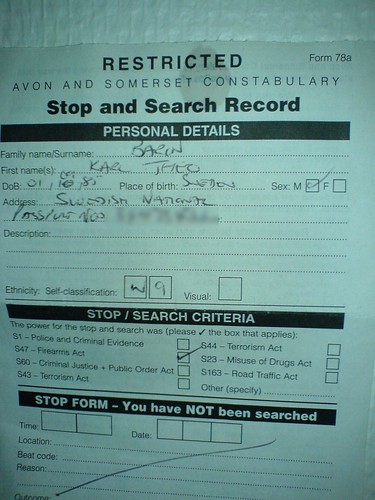
When the police stop a car for a traffic violation, they have to let the car go once they reasonably finish the original stop.
According to the Salt Lake Tribune, federal judge Clark Waddoups excluded evidence found after an illegal search of an automobile because the police officer continued to question the driver after the traffic stop had concluded.
The driver's attorney, Benjamin McMurray, argued that "no reasonable person would have felt free to drive away from an officer who continued an interrogation despite having repeatedly been refused."
The United States Constitution protects against unreasonable warrantless searches. The driver in this case may have been guilty of speeding, but that did not entitle the police officer to search his car.
I have seen numerous cases, both as a prosecutor and as a defense attorney, in which a police officer improperly extended a traffic stop and asked for consent to search a car. Usually, the officer needs either a warrant to search or the driver needs to give consent to search the car if the search is going to be legal. If the driver does not give consent it is often difficult for the officer to legally search.
Monday, January 11, 2010
Are Eyewitnesses Reliable?

An article in Scientific American questions the reliability of eyewitness identification. One of the major reasons that we should question eyewitness identification is that the process of recalling memories is more like reconstructing an event than replaying a video recorder.
"The uncritical acceptance of eyewitness accounts may stem from a popular misconception of how memory works. Many people believe that human memory works like a video recorder: the mind records events and then, on cue, plays back an exact replica of them. On the contrary, psychologists have found that memories are reconstructed rather than played back each time we recall them. The act of remembering, says eminent memory researcher and psychologist Elizabeth F. Loftus of the University of California, Irvine, is 'more akin to putting puzzle pieces together than retrieving a video recording.' Even questioning by a lawyer can alter the witness’s testimony because fragments of the memory may unknowingly be combined with information provided by the questioner, leading to inaccurate recall."
Our faith in eyewitness identification has important consequences. According to the Innocence Project, eyewitness misidentification plays a role in over 75% of wrongful convictions.
Historically, most judges in Utah and throughout the country have prevented attorneys from presenting scientific evidence of problems with eyewitness identification to juries. However, last month, the Utah Supreme Court ruled that criminal defendants should have the opportunity to call experts to testify regarding this important research. A story in the Salt Lake Tribune regarding the case can be found here and the Court's opinion, State v. Clopten, can be found here.
Wednesday, January 6, 2010
Man Freed After Prosecutor Refuses to Turn Over Evidence
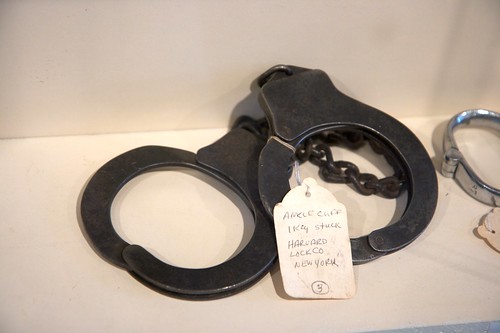
You can't defend yourself against criminal charges unless the police and the prosecution tell you what you've been charged with and provide you with the evidence that you need to prepare your defense.
The Federal and the Utah Rules of Criminal Procedure require prosecutors to turn over evidence that is relevant to the defense's case preparation. But, the St. George Attorney's office refused to turn over the information they used to obtain a search warrant and information about a confidential informant after they had been requested under the Government Records Access Management Act.
The case was a federal prosecution, but the St. George attorney's office refused to comply with court orders that required them to turn the information over. Judge Dee Benson of the Utah Federal District Court permanently dismissed gun and drug charges that had been pending against Donald Gregory Edwards.
A Salt Lake Tribune story on the ruling can be found here.
Monday, December 28, 2009
"Experts" Execute Man in Texas

We cannot blindly trust a prosecutor's or a police officer's claims of certainty or expertise. A moving essay in the New Yorker suggests that a man in Texas may have been executed for a crime he did not commit based on the testimony of experts who did not know what they were talking about.
Cameron Todd Willingham was executed in Texas for burining his own house down and, in the process, killing his three children. Willingham was found guilty at a jury trial based in large part on the testimony of arson investigators who claimed to be experts in determining the cause of fires. They testified that the burn patterns clearly pointed to arson and that they were confident that Willingham started the fire in an attempt to kill his children.
The trouble is that the methods these supposed experts used to make these determinations are totally unscientific and unreliable. Dr. Gerald Hurst, who received a Ph.D. in chemistry from Cambridge University, reviewed the evidence pointing to arson in Willingham's case and concluded that the fire was accidental. It was not caused by arson. As David Grann writes in the New Yorker, "Hurst concluded that there was no evidence of arson, and that a man who had already lost his three children and spent twelve years in jail was about to be executed based on 'junk science.'"
Hurst's scathing report and extensive research strongly suggested that the State of Texas was close to killing an innocent man. But that did not stop the executioner. Willingham was put to death on February 17, 2004. He protested his innocence to the end.
Thursday, December 17, 2009
Innocent Man Freed after 35 Years in Prison
James Bain has spent 35 years in prison after being convicted of some horrible crimes: rape, kidnapping, and breaking and entering. Today, according to the Deseret News, Mr. Bain was released by a Florida Judge.
35 years ago, a jury rejected Mr. Bain's alibi defense and believed the testimony of eye witnesses. Fortunately, DNA evidence was able to prove that Mr. Bain did not commit the crime for which he was imprisoned.
The Florida Innocence Project helped file motions on Mr. Bain's behalf. He had been trying to get DNA tests done on the evidence in his case for years. He is finally free.
Below is an excerpt from the press conference in which an Innocence Project attorney summarizes the case.
Subscribe to:
Posts (Atom)